
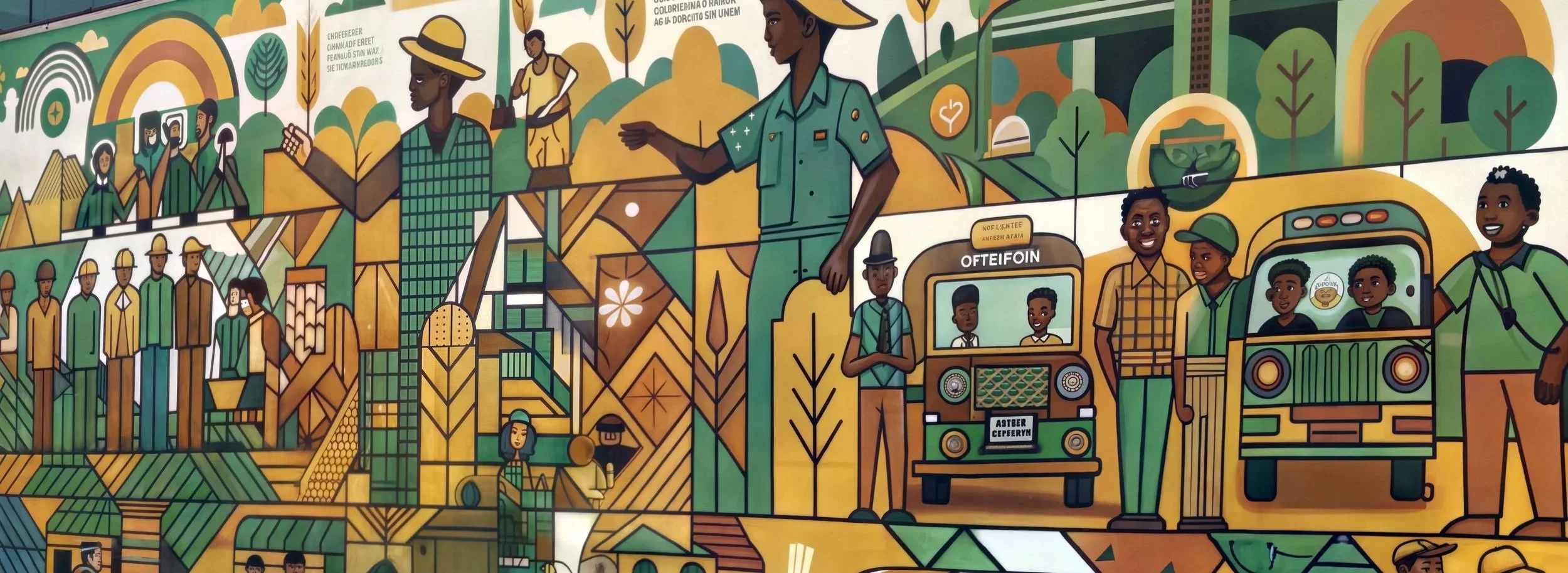
The Popular Transport Reader
View & Download Excerpts from the
Popular Transport Reader
We developed the Popular Transport Reader to help policymakers, public leaders, and transportation advocates better understand popular transport systems. We hope it enables local and national governments to work with the popular transport sector toward a Just Transition.
The Reader includes twenty articles that summarize current research, offer practical insights, and/or provide recommendations. They are meant to be read as separate pieces. We hope this anthology helps deepen your understanding and appreciation of popular transport systems as assets. As climate challenges rise alongside urban growth, we must recruit informal transport into climate action. There is no approach that leads to more sustainable cities without engaging popular transport.
We are releasing selected pieces from the Reader, one article per week, over the next few weeks. We will publish the full Reader at the end of October 2026, in time for the 1st Global Convening on Informal & Shared Mobility.
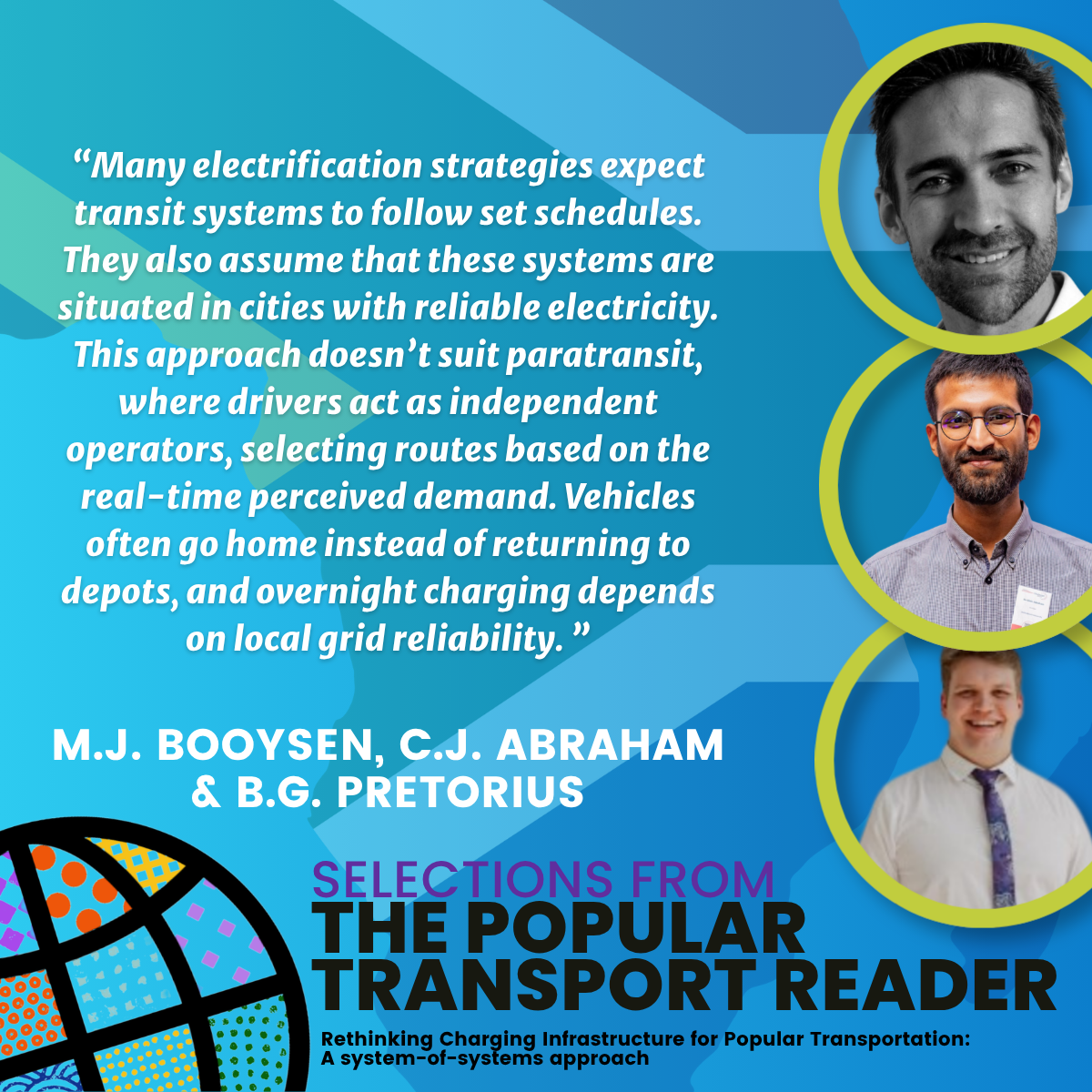
Rethinking Charging Infrastructure
for Popular Transportation
(A system-of-systems approach)
With Cape Town as their locus of study, M.J. Booysen, C.J. Abraham, and B.G. Pretorius suggest a "system-of-systems" framework—a tool to evaluate context and determine strategies for the electrification of paratransit in the Global South. Their research highlights a few key points: Plans need to consider fragile grid infrastructure, road conditions, geography, and driver behavior. Their framework customizes strategies to the local context.
You can download the article here.
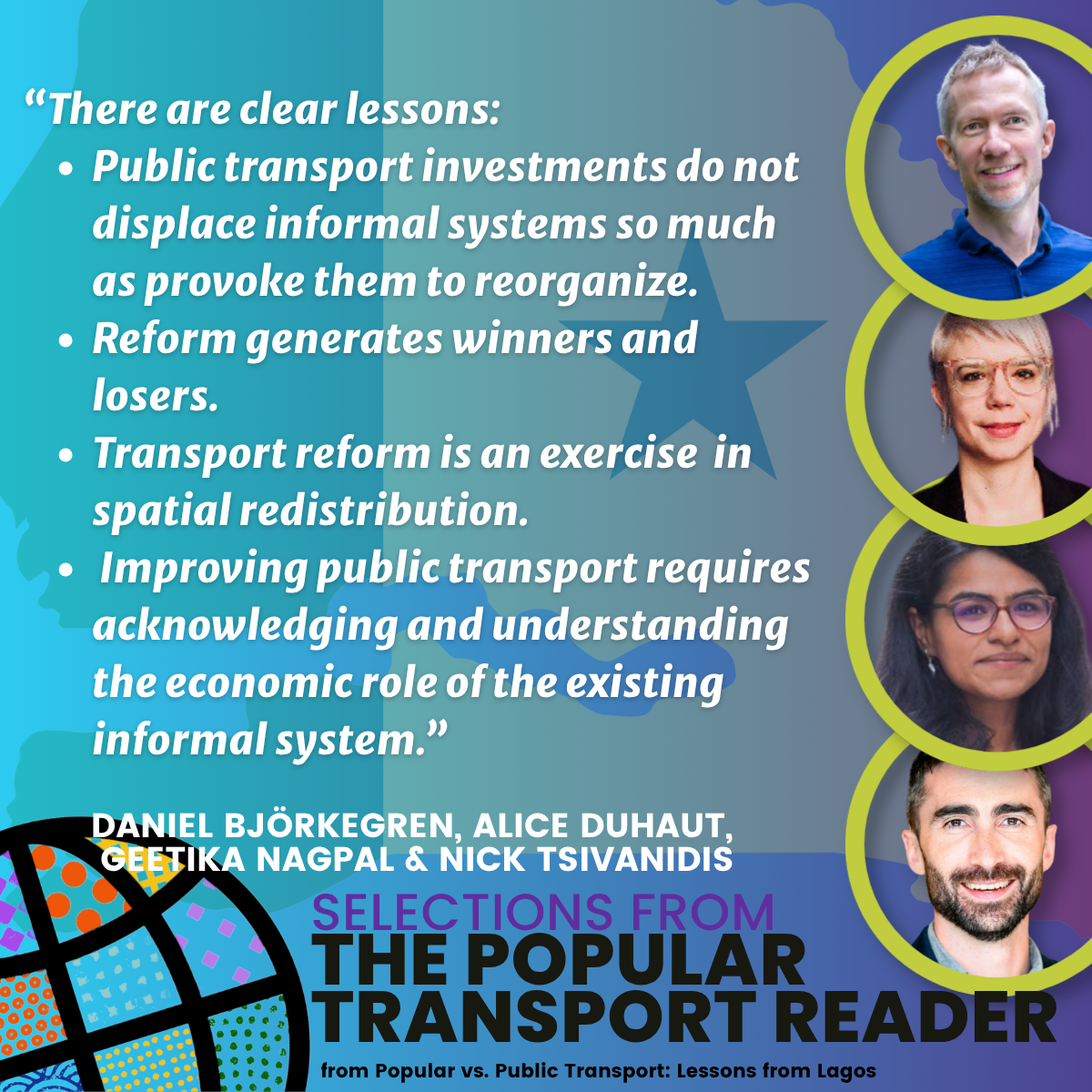
Popular vs. Public Transport: Lessons from Lagos
Daniel Björkegren, Alice Duhaut, Geetika Nagpal, and Nick Tsivanidis analyze the economic clash between formal bus reforms and Lagos's informal danfo network in their research paper. Their findings indicate that while formal buses have led to lower minibus fares for some, they also caused significant income losses for informal drivers and increased wait times due to reduced service frequency. The study suggests that transport reforms do not merely replace informal systems; they trigger dynamic market reorganizations that unevenly redistribute benefits and costs across the city.
NOW AVAILABLE: Download here.
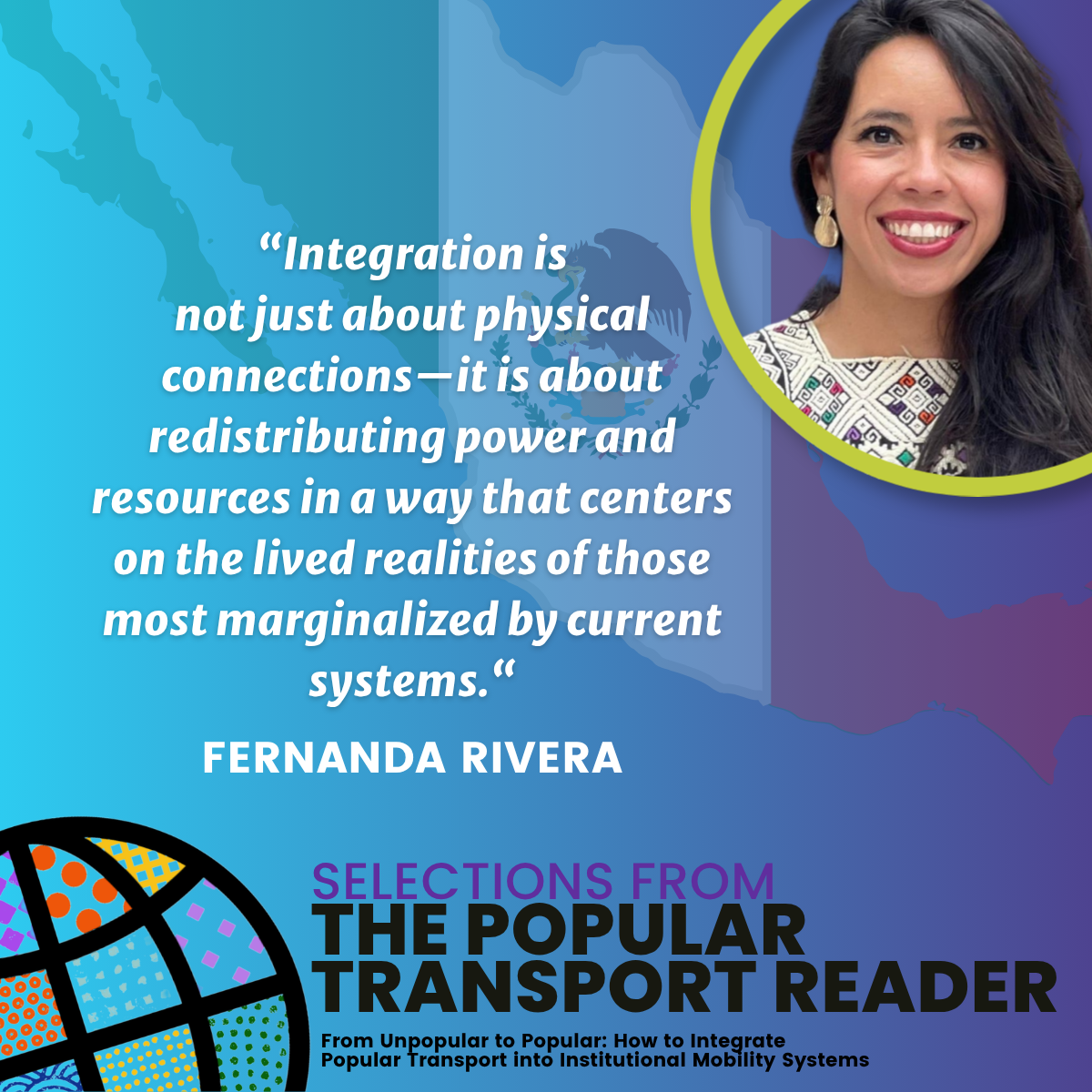
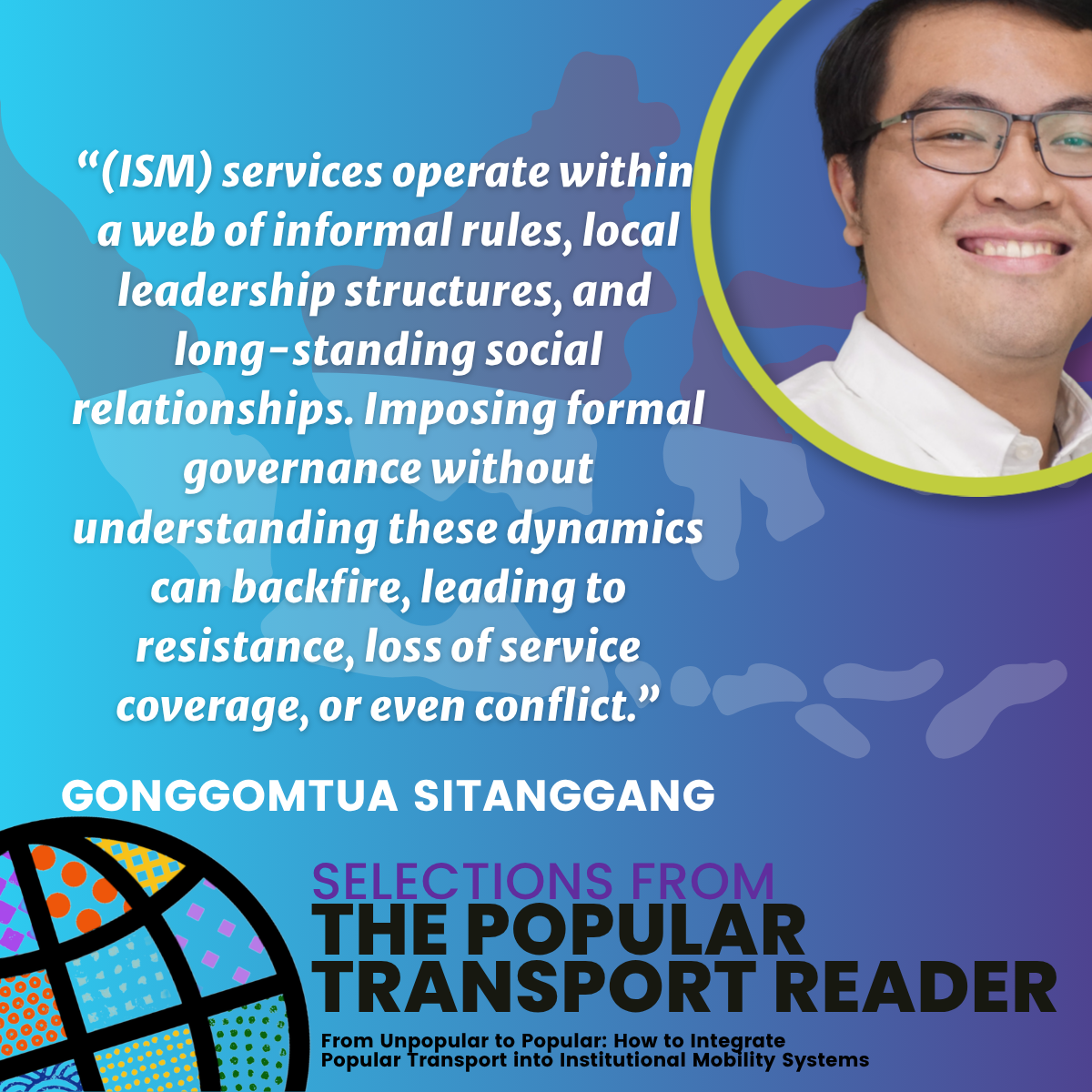
From Unpopular to Popular: How to Integrate Popular Transport into Institutional Mobility Systems
Fernanda Rivera and Gonggomtua Sitanggang argue that society should view popular transport integration as a matter of justice, not just a technical issue. Drawing from experiences in Mexico City and Jakarta, they assert that successful integration relies on inclusive governance, recognizing operators as legitimate stakeholders, and applying a gender-sensitive lens. They argue that a truly multimodal system must prioritize accessibility and human-centered design rather than simple homogenization.
NOW AVAILABLE: Download here.
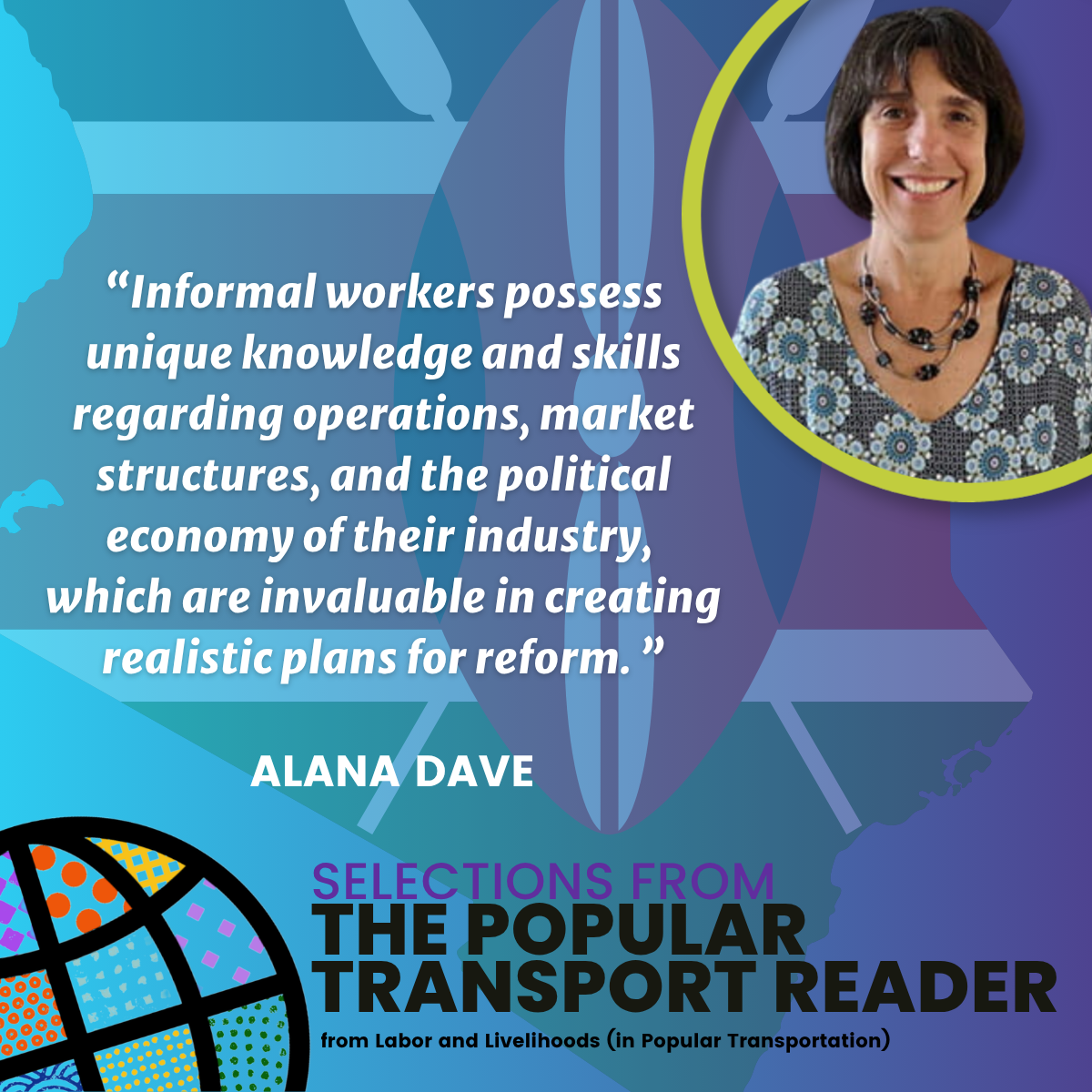
Labor and livelihoods
Alana Dave outlines a framework for rethinking labor dynamics and livelihoods in popular transport. She calls for equity within the ecosystem. She highlights severe "decent work deficits," including poor working conditions, systemic police harassment, and widespread gender discrimination affecting millions of workers. Dave advocates for participatory labor impact assessments and early consultations with trade unions to ensure formalization processes safeguard workers' rights and enhance economic resilience.
NOW AVAILABLE: Download here.
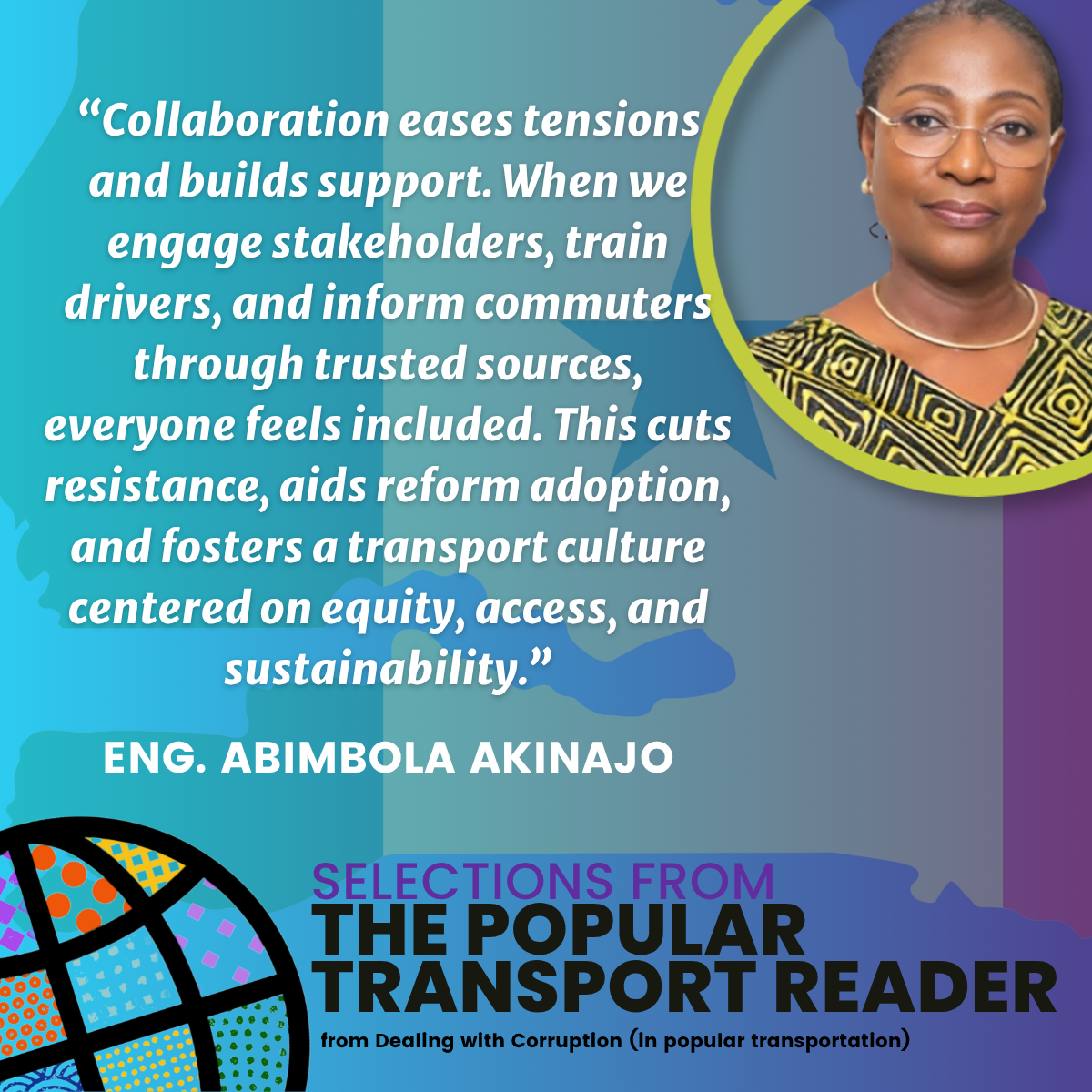
Dealing with corruption
Engr. Abimbola Akinajo, Managing Director of the Lagos Metropolitan Authority (LAMATA), presents a strategy to dismantle systemic corruption and union extortion in Lagos’s informal transport sector. This approach focuses on institutional reform and leverages digital tools to achieve these goals. She advocates for cashless payments, GPS tracking, and telematics to cut manual leakages. These measures seek to build a clear, data-focused link between regulators and grassroots groups. Akinajo says that making the industry professional through these partnerships is key. This helps protect drivers' earnings and ensures fair resource allocation for a "just transition."
NOW AVAILABLE: Download here.
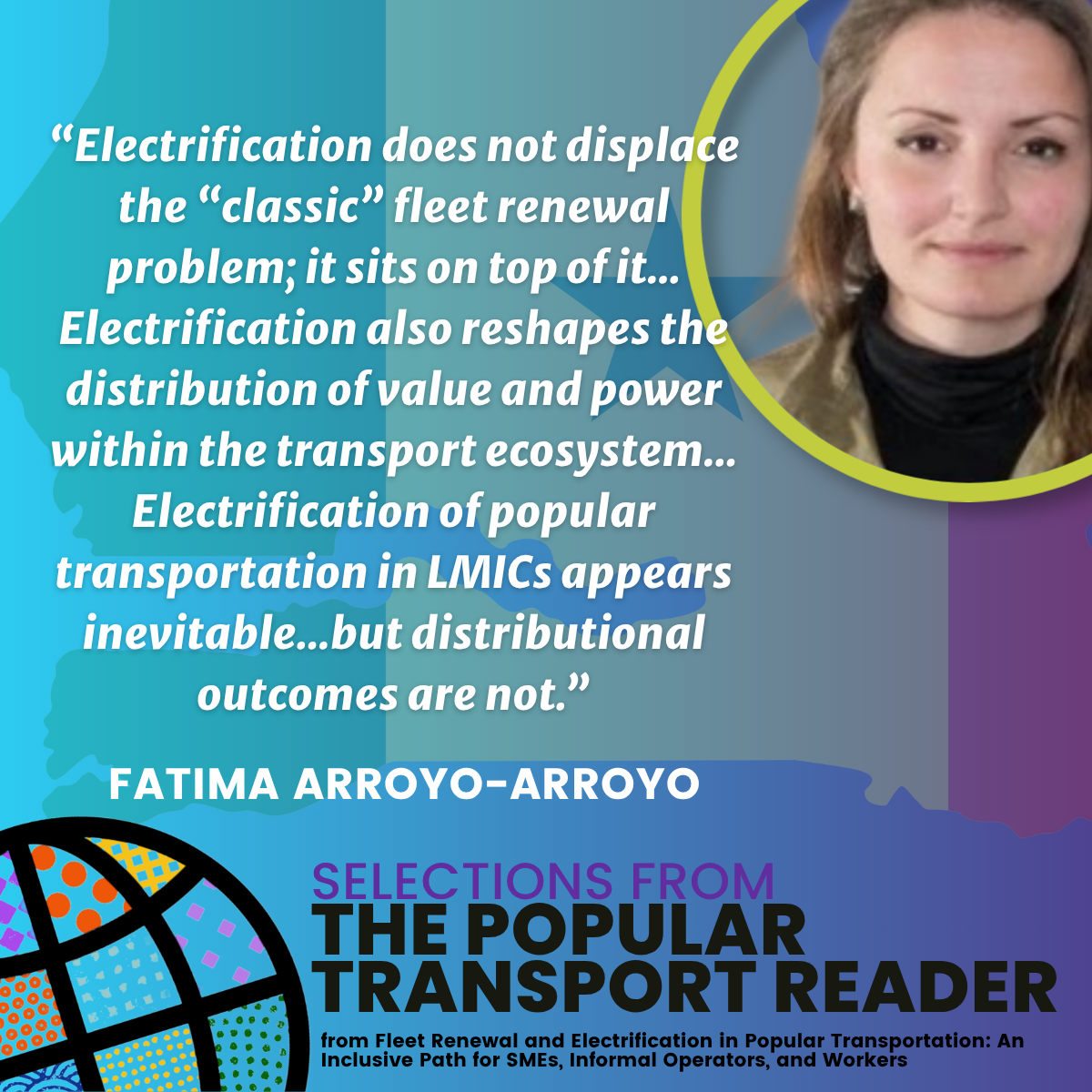
Fleet Renewal and Electrification in Popular Transportation: An Inclusive Path for SMEs, Informal Operators, and Workers
Fátima Arroyo Arroyo examines structural barriers to fleet renewal and highlights how electrification introduces new financial and technical risks for informal operators. Case studies from Senegal, South Africa, Kenya, and Morocco show that successful transitions need financing that matches cash flows and improves operations. Fatima's four-part action agenda highlights inclusive finance, integrates infrastructure, strengthens labor protections, and fosters multi-stakeholder partnerships to prevent the marginalization of SMEs.
NOW AVAILABLE: Download here.

The critical importance of resilience and adaptation in popular transport: Strategies for a climate-proofed future
Jacqueline M. Klopp and Milnael Gomez focus on the urgent need for climate adaptation and resilience in popular transport systems. They offer a strong risk assessment framework that categorizes climate hazards, such as extreme heat and flooding. This framework looks at how these hazards affect transport infrastructure and user health. They say that to build resilience, we need open data systems. We should also include popular transport in Sustainable Urban Mobility Plans (SUMPs). Additionally, using nature-based solutions can help protect key mobility routes.
NOW AVAILABLE: Download here.